01
Check what is under it and in front of it
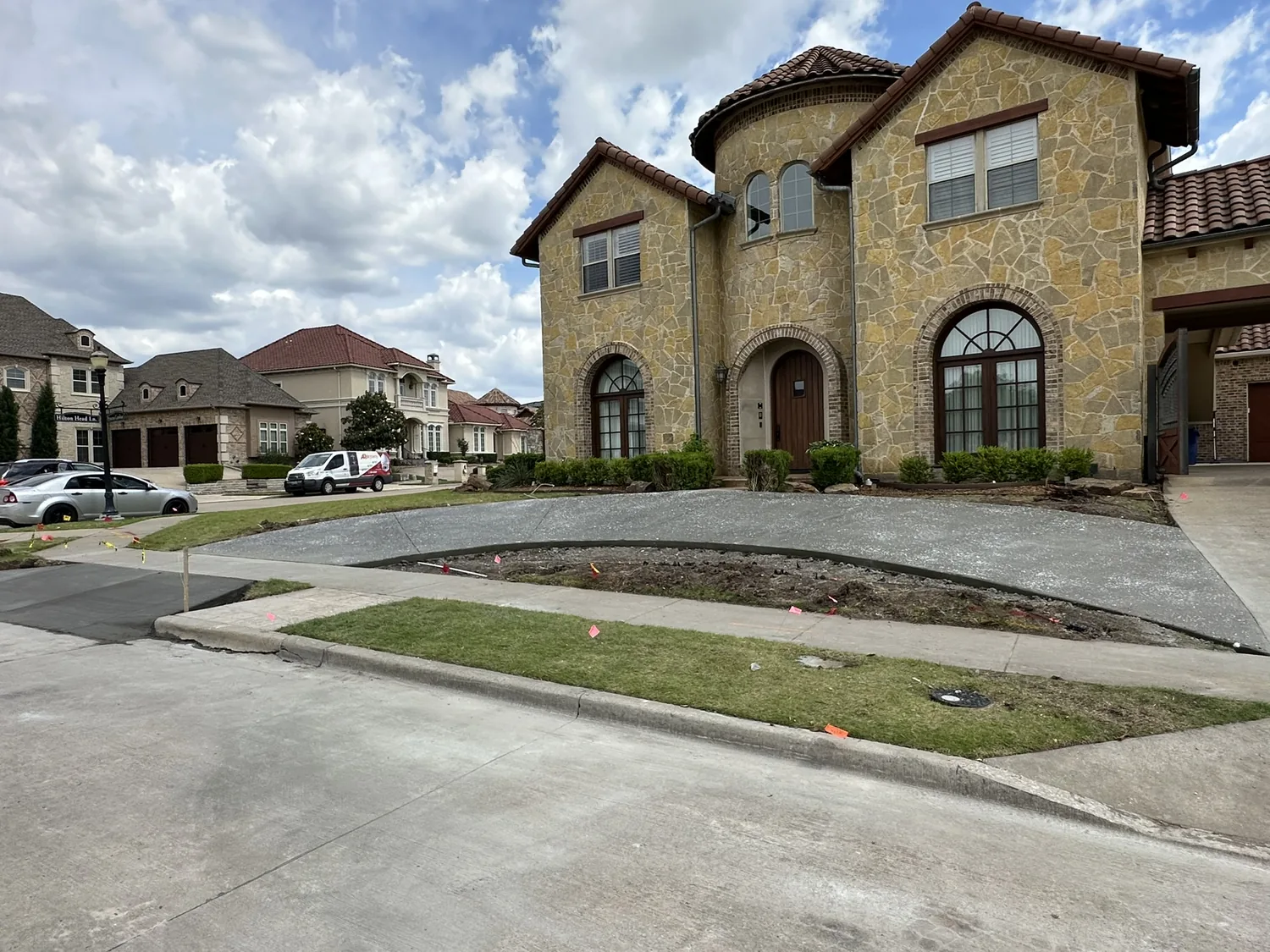
Before we price a driveway we look at the soil, the existing slab, and the street side. On open-ditch roads that means the culvert; in subdivisions it means the curb and the sidewalk the approach crosses.
Room for one more car, a path to the side gate, or a full tear-out of a driveway that has settled and split. Built thick enough for the trucks Cypress actually drives, with the water sent to the street.
Tear-out, forms, base, reinforcement, pour, screed, broom, joints, cure. The whole job, in 3D.
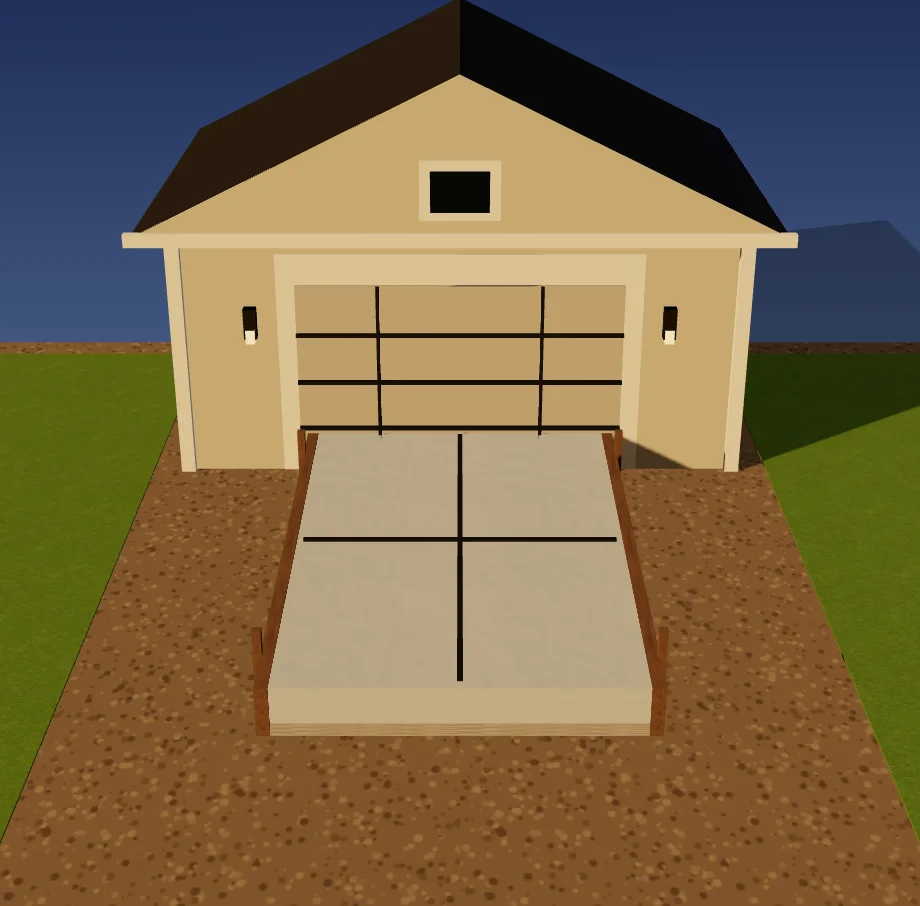
Drag the handle to reveal the finished pour.
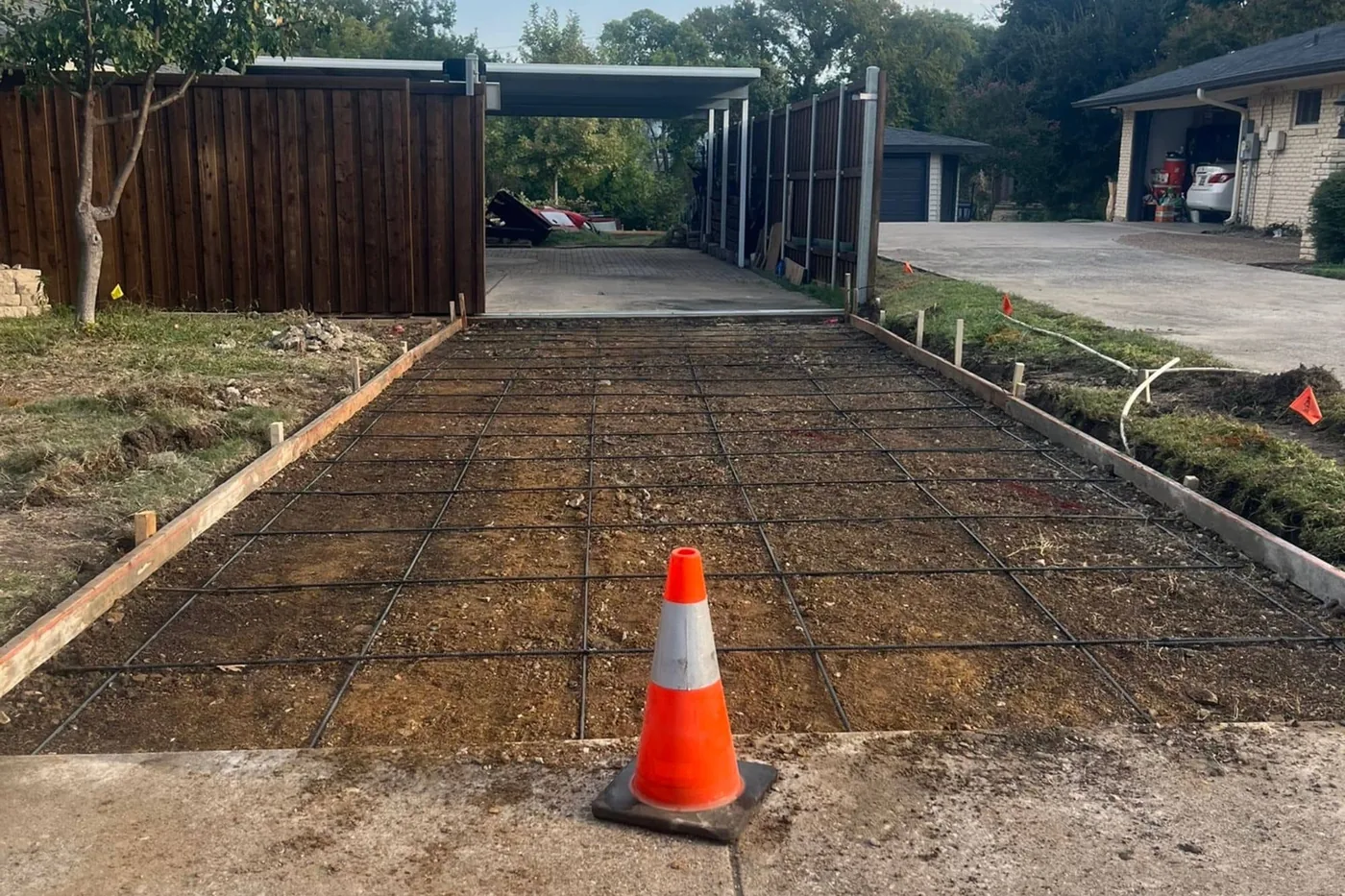
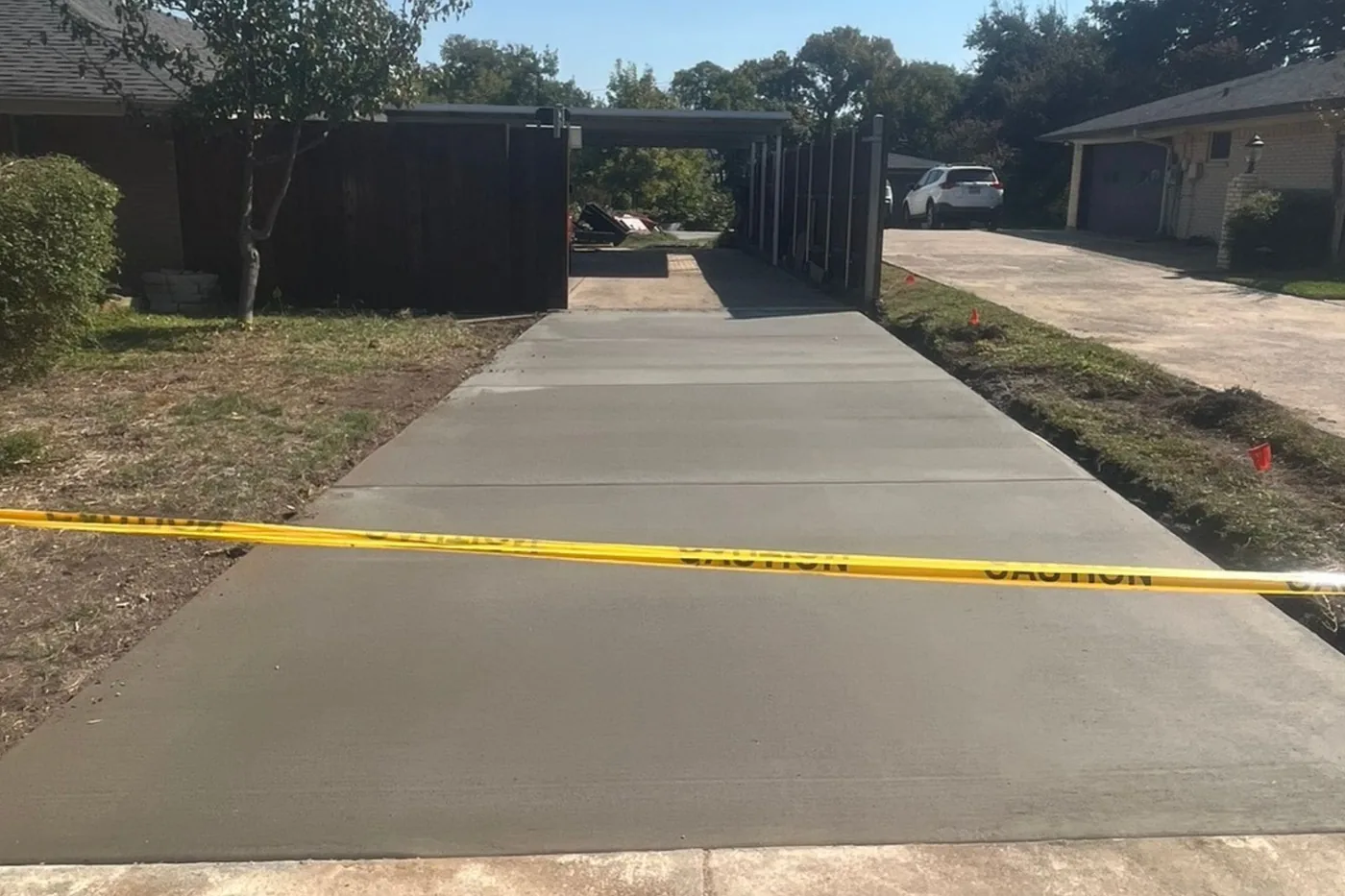
Credibility comes from how it's built, not from promises. Here's the order of operations on every concrete driveways job.
Before we price a driveway we look at the soil, the existing slab, and the street side. On open-ditch roads that means the culvert; in subdivisions it means the curb and the sidewalk the approach crosses.
Pickups, work trucks and the occasional trailer are normal here, so the slab is sized for them, and thickened where a heavy vehicle will park or turn.
Reinforcement is set on chairs at the right height so it actually sits inside the concrete, where it can carry the load and hold sections together if the clay below shifts.
On flat ground a driveway is often the main path water takes off the lot, so we set a steady fall toward the street and away from the garage door and foundation.
Control joints are cut on a planned layout, the slab is cured with the heat in mind, and you get a clear date for when it can take a car.
Most contractors vanish after the deposit. We pick up the phone, show up when we say, and stand behind the work after the truck leaves. The follow-through is the difference.
A foreman we know runs your job and a vetted crew does the work, managed by Lucky's, one company accountable from the first call to the final walkthrough.
COI and lien waivers on file before we break ground. The documentation that lets commercial clients pay and gives homeowners peace of mind.
Prepped subgrade, reinforced and mixed to spec for the job, and proper curing. We build credibility through the process, not promises. On concrete driveways, that starts with check what is under it and in front of it.
It depends on the square footage, the thickness the vehicles call for, whether there is an old slab to break out and haul off, the finish, and what happens at the street, such as a culvert or a curb cut. We give you a written price after walking it rather than guessing over the phone.
Usually, yes. We dowel the new section into the existing slab so the two stay aligned, match the surface, and carry the slope through so water does not collect along the seam. If you are in an HOA community, the widening will likely need approval first, and we can supply the plan for that.
If the work touches the county right-of-way, which runs from your front property line toward the road, Harris County's permit office generally needs to approve it, and the county decides the pipe size and material for a culvert. We check this before scheduling, because it is much easier to settle before the pour than after.
Common causes are a thin slab, steel that ended up at the bottom instead of inside the concrete, joints spaced too far apart, or clay that swelled and shrank unevenly under one side. When we replace it, we fix the cause, not just the slab.
On flat lots it is the thing to watch. Water that sits on or beside the slab keeps the soil wet on one side and dry on the other, and that uneven movement shows up as cracks and lifted edges over time. A steady fall to the street avoids most of it.
Walking on it comes first, cars a while later, and heavy trucks later still, since concrete keeps gaining strength well after it looks finished. We give you the dates for your pour based on the weather it went in under.
You'll hear back from a real person, usually the same day. No call center, no runaround, no chasing us down.
Booking up fast this season. Or call (346) 480-5442